As Christians, we all claim to want to be "biblical" and follow what Scripture teaches. Yet we often find ourselves struggling with two persistent questions: Why do Christians disagree so much about what the Bible means? And what do we do with the parts of Scripture that seem confusing or difficult to apply?
The answer lies in understanding that we are meant to use the Bible to know and follow the Jesus of the Bible - not a Jesus of our own making or imagination, but the actual Jesus who is the hero of the entire biblical story.
How Should We Interpret Scripture?
Jesus himself taught us how to read the Bible. After his resurrection, he told his disciples that "everything must be fulfilled that is written about me in the law of Moses, the prophets, and the psalms" (Luke 24:44). He opened their minds to understand that all of Scripture had been leading up to him.
In another instance, Jesus told religious leaders who studied Scripture diligently: "These are the very scriptures that testify about me, yet you refuse to come to me to have life" (John 5:39-40). The problem wasn't their knowledge - it was that they missed the point. Scripture points to Jesus.
The Bible Is More Like a Library
Understanding Scripture becomes easier when we recognize that the Bible isn't just one book flowing smoothly from beginning to end. It's more like a small library written by different authors over a vast period of time. But it all fits together when we see how it leads toward Jesus.
This means we can ask the Holy Spirit for help in understanding, since the Spirit inspired all Scripture. We should also develop our interpretive skills, recognizing that words have meaning in context. And we must remain humble, remembering that our interpretation of Scripture is not the same as Scripture's authority.
Three Key Questions for Biblical Living
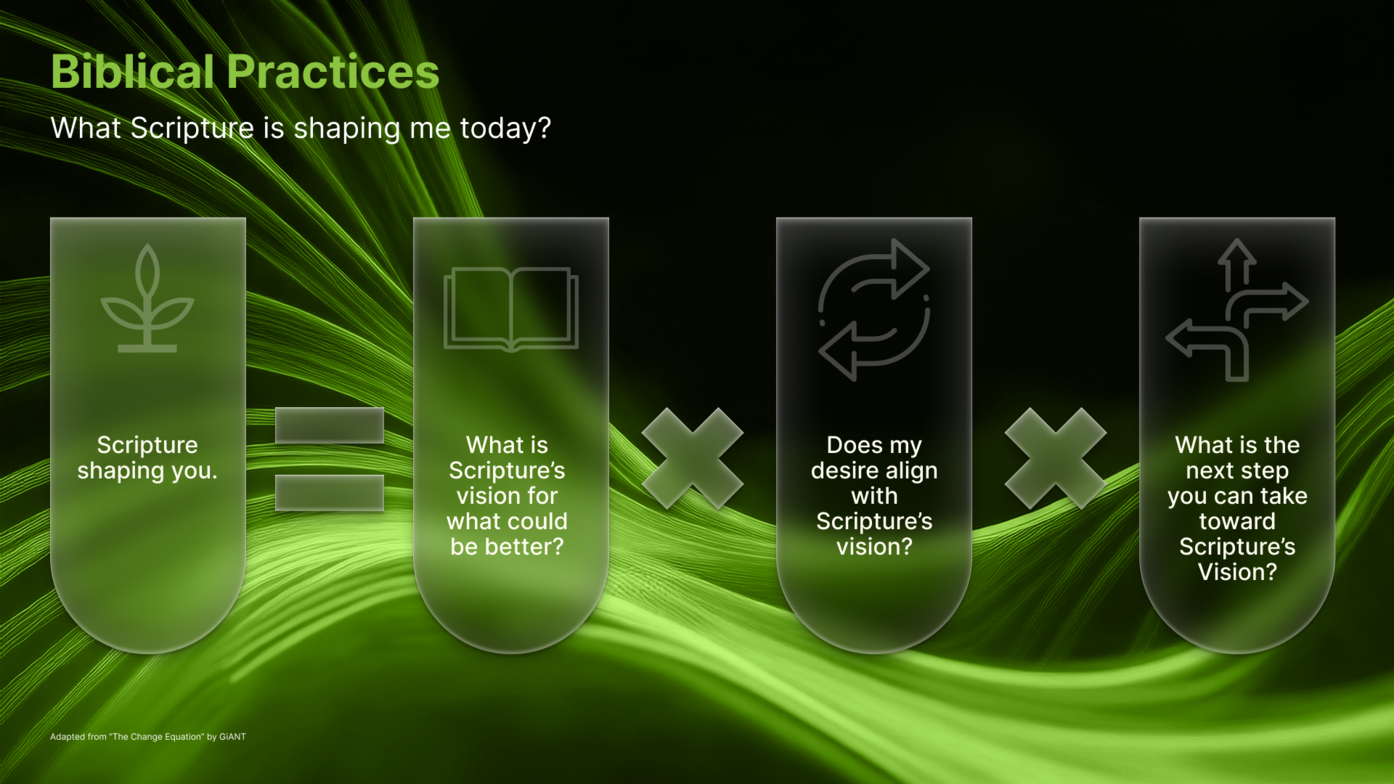
When approaching any passage of Scripture, we should ask ourselves three essential questions that help us move from knowledge to transformation.
Do I Get It? (What's Scripture's Vision?)
The first question is: What's Scripture's vision for what could be better? Whether we're reading from Job, Genesis, or James, we should look for how this passage points toward Jesus and shows us a vision of what could be better - either in the grand scheme of God's plan or in the nitty-gritty details of our own hearts.
This requires interpreting the Bible the way Christ taught and modeled. We don't have to find hidden secrets about Jesus in every verse, but we should see how all Scripture testifies to Christ and his work.
Do I Want It? (Check Your Attitude)
Knowledge without desire for change is useless. We might understand what Scripture teaches but resist the demands it would place on our lives. This is where we need the Holy Spirit to align our attitudes with Jesus.
Jesus said, "If anyone wants to come after me, let him deny himself, take up his cross, and follow me." Following Jesus might cost us more than we want to pay - our time, resources, comfort, or pride. We need our attitudes adjusted to match Jesus' attitude toward the Father, toward people (both friendly and hostile), and toward faithfulness in all things.
Do I Know What to Do? (Meditate Until You Know Next Steps)
The third question moves us to application: What should someone in my role in Jesus' story do next? If we acknowledge that this isn't our story but Jesus' story, and we're characters in his narrative, then we need to know how to live accordingly.
Scripture might reshape how we see our past, how we live in the present, or how we prepare for the future. Like Paul wrote in Ephesians 4, we need to "put off the old self," "be renewed in the attitude of your minds," and "put on the new self."
The Goal: Being Shaped by Scripture
The ultimate question is: What scripture is shaping me today? The word "shaping" is crucial because the goal isn't just knowledge - it's transformation. We want any part of the Bible that comes to our attention to help us follow Jesus more faithfully.
If Scripture never prompts us to try a different way of living, then we're not being shaped by Scripture. It should challenge how we pray, use our money, treat our bodies, handle difficult emotions, and resolve conflicts with others.
Life Application
This week, commit to reading Scripture with these three questions in mind. Choose a passage and work through each question deliberately: Do I get how this points to Jesus and God's vision? Do I want what this passage is calling me toward? Do I know what specific step to take in response?
Don't rush through this process. Sit with Scripture until you know what to do with it. Ask the Holy Spirit to change your attitude where needed and to show you practical next steps.
Consider these reflection questions: What are your current habits with the Bible, and how can you improve them? When was the last time Scripture challenged you to change something specific about how you live? How often do you ask the Lord to change your attitude, not just increase your knowledge?
Remember, the goal isn't to become a better Bible scholar - it's to become a more faithful follower of the Jesus revealed in Scripture. Let his story become your story, and let Scripture shape you into his likeness.